

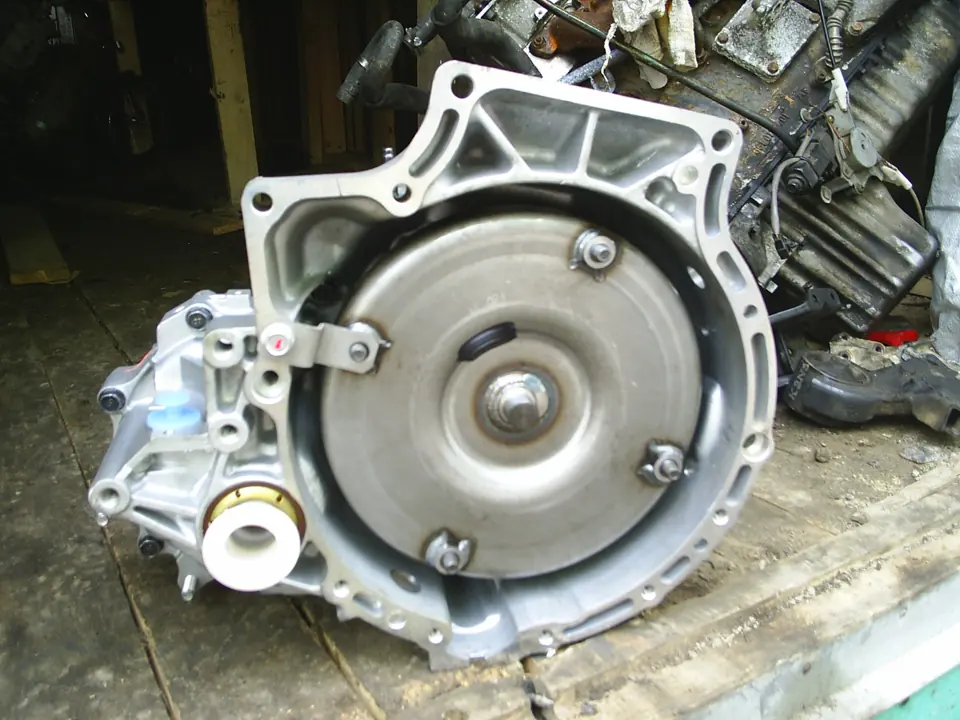
If you press a manual's clutch pedal, the engine disconnects from the wheels. An automatic has no pedal, so the torque converter does that job without any help from you. When it misbehaves, drivers describe a shudder, a buzz at highway speed or a vehicle that feels weak off the line.
At a glance
- Bolted to the engine's flexplate, inside the front of the transmission
- Three working parts: impeller, turbine and stator
- A lock-up clutch ties engine and transmission together at cruising speed
- Heat is its biggest enemy
How does the converter pass power with no direct connection?
Picture two fans facing each other in a sealed, oil-filled housing. The first, the impeller, is attached to the engine. As it spins it throws fluid toward the second fan, the turbine, which is attached to the transmission input shaft. The moving fluid pushes the turbine around. There is no solid link, which is why the engine can idle while you sit at a light with your foot on the brake.
Between the two sits a third part, the stator. It redirects fluid returning from the turbine so that it helps the impeller instead of fighting it. That redirection is what lets a converter multiply torque when the turbine is turning slower than the engine, for example when pulling away from a stop or with a heavy trailer.
What is the lock-up clutch?
A plain fluid coupling always slips a little, and slip makes heat and wastes fuel. Most automatics since the 1980s add a friction clutch inside the converter. At steady cruising speed the control unit applies it, and the engine and transmission turn as one. You may feel a slight change in engine note when it engages or releases. The how a transmission works guide shows where this fits in the whole shift process.
What does a bad converter feel like?
Common reports are a shudder or vibration like driving over rumble strips, usually at a steady speed when the lock-up clutch applies; a flare in engine speed without matching acceleration; a whine or rattle from the front of the transmission; and overheating. The shudder and vibration page lists the usual causes. A shudder does not always mean the converter itself. Worn or wrong fluid can cause the same feel, so the fluid is looked at first.
Overheating is the converter's main enemy. The housing can balloon and the stator can seize or break under extreme heat or load. That is one reason the towing and heat guide matters for trucks and RVs.

Can a converter be fixed or does it need replacing?
That depends on what failed and what else was damaged. Metal debris from a failed converter travels through the fluid and can harm the rest of the transmission, so the cooler lines and the fluid are part of the conversation too. A mechanic has to remove the transmission to reach the converter, which is why it is often discussed alongside a rebuild when the unit is already out.
